What is a Keyboard CPS Test?
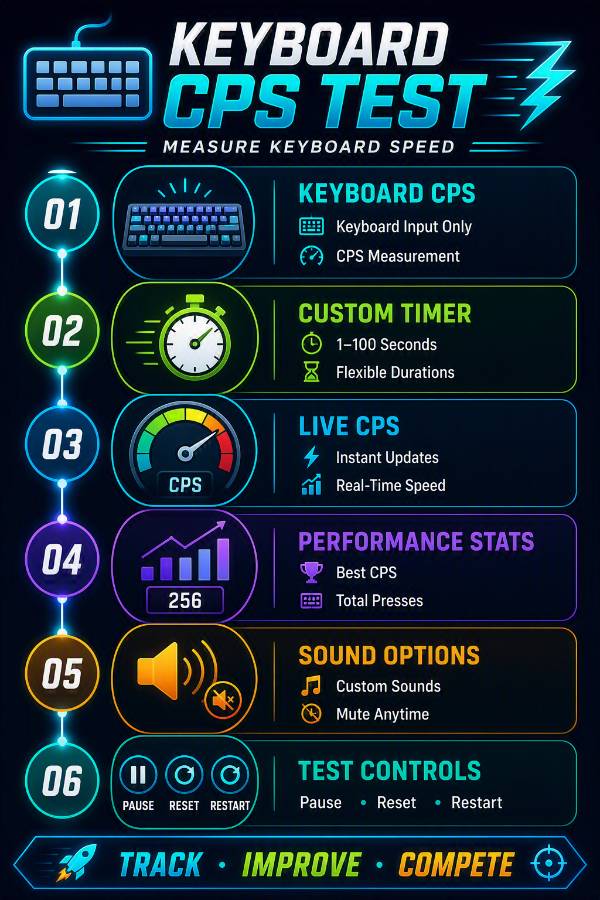
A Keyboard CPS Test measures how many keyboard presses you can make per second during a selected period. The tool focuses on keyboard input speed.
What does CPS mean?
CPS means Clicks Per Second. In this keyboard test, the measurement represents the rate of keyboard presses recorded during the test.
Which duration should I use for a quick CPS check?
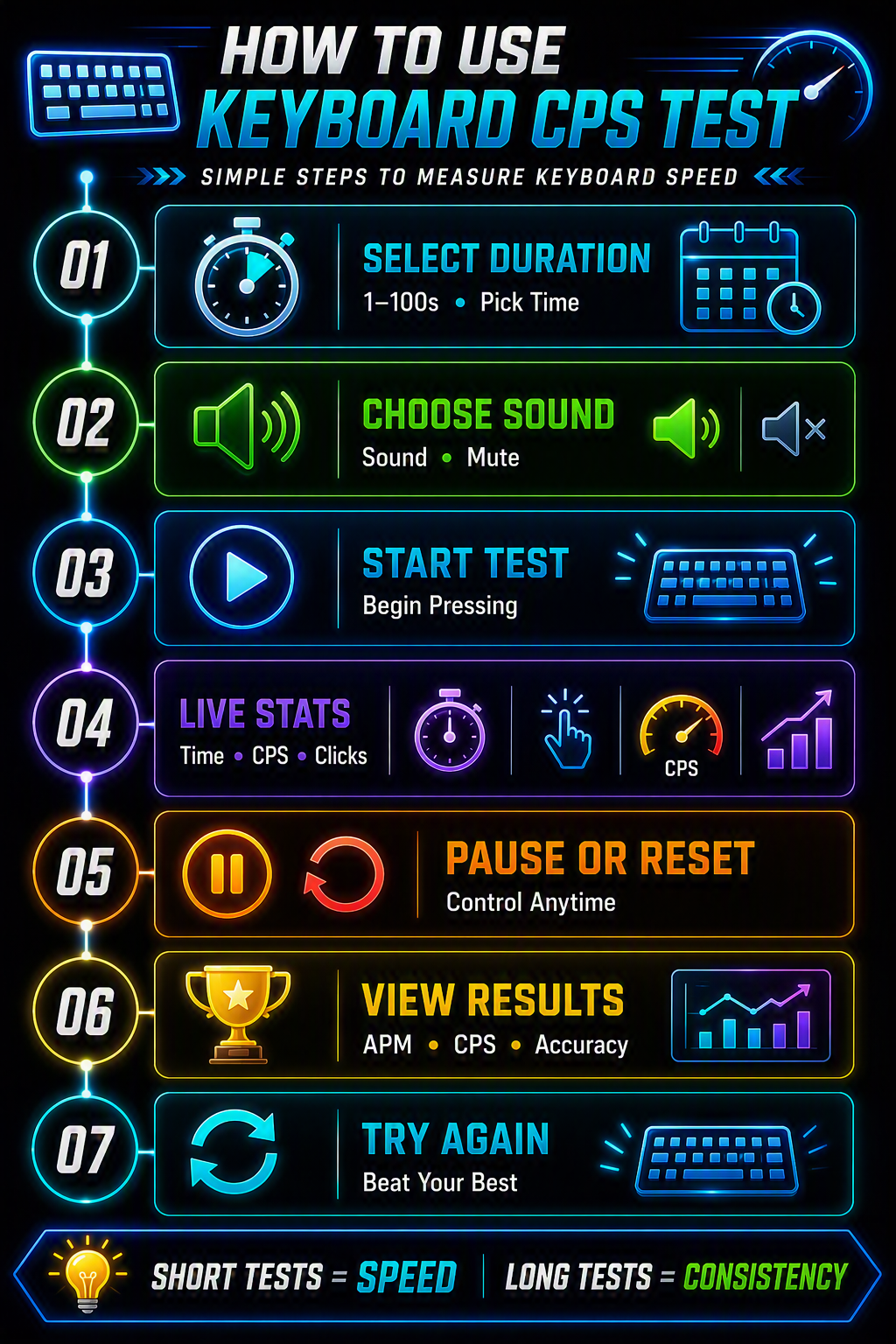
The 1-second or 2-second option is useful when you want a very quick measurement. Short tests can also be useful when you want to make several attempts without spending much time on each one.
Why would I use a longer test?
A 30, 60, or 100-second test gives you a longer period to maintain your keyboard pressing pace. This can help you see whether your performance remains consistent instead of relying on one short burst.
Does the test show CPS while I am testing?
Yes. The tool displays instant CPS live during the test, so you can see your current rate while the timer is running.
What is the best CPS?
Best CPS shows the strongest CPS value reached during the current test. It can help you identify your fastest moment rather than looking only at the final result.
What happens when the timer reaches zero?
The test stops recording the active attempt and displays your final result, allowing you to review your performance.
When would I use the pause button?
Pause can be useful if you need to briefly stop the test because of an interruption. It prevents you from having to immediately abandon the current attempt.
Can I take the test again after finishing?
Yes. You can restart the test and make another attempt whenever you want to compare your results.
What sounds are available?
The test provides mechanical click, default key, Morse code, bubble pop, quack, and many more sound options. You can choose whichever feedback style you prefer.
Can I take the test without sound?
Yes. Select the mute option if you prefer to perform the test without sound effects.
Why would someone want sound during a CPS test?
Audio feedback can make each keyboard press easier to notice while testing. Some users may find it useful for maintaining a consistent rhythm, while others may prefer to mute it.
Why did my CPS change between two attempts?
CPS can naturally vary between attempts because your pressing speed may not remain identical each time. The selected duration, rhythm, and consistency of your keyboard presses can all affect the result.
Why is my best CPS higher than my final CPS?
Your best CPS represents your strongest recorded rate during the test, whereas the final result reflects your overall performance. A brief period of faster pressing can therefore produce a higher best CPS.
Why can my CPS decrease during a longer test?
Maintaining the same pressing speed for a longer period can be difficult. A longer test gives you more time for your pace to change, so your performance may fluctuate during the session.
Can I use the test to compare different durations?
Yes. You can run separate attempts using different durations; for example, comparing a short test with a longer one to see how your keyboard pressing speed changes as the testing period increases.
What should I do if I accidentally start the wrong duration?
You can use the available Reset control and select the duration you actually want before starting another attempt.
What is the best way to interpret my CPS result?
Don't look at CPS alone. Compare your final CPS, best CPS, and total clicks, and consider whether your performance stays consistent when you change the test duration. This gives you a more useful picture of your keyboard speed than a single number from one attempt.
How can I test my Mac keyboard online?
Press the keys on your physical
Mac keyboard one by one. The corresponding key on the virtual keyboard should light up, allowing you to check whether the keystroke is being detected.
What is a mouse DPI calculator used for?
The
Mouse DPI Calculator helps you work out mouse sensitivity changes when adjusting DPI and related sensitivity values.
Why use a digital tally counter instead of writing numbers down?
A digital
tally counter makes repeated counting easier because you can update the total immediately without repeatedly writing or calculating the running number.